
Practical Bottlenecks and Market-Driven Innovation in Global Supply Chains
Flexible Intermediate Bulk Containers (FIBCs), commonly known as bulk bags, remain essential across agriculture, chemicals, minerals, and food-related supply chains. Their advantages—high load capacity, transport efficiency, and cost effectiveness—are well established.
Yet in recent years, the FIBC market has entered a different phase. Growth continues, but procurement behavior has changed. Buyers are no longer focused only on breaking strength or unit price. Instead, decisions are increasingly shaped by risk control, consistency, audit readiness, and delivery reliability across regions.
In this environment, FIBCs are shifting from a capacity-driven commodity toward a system-managed industrial packaging product.
Where the Real Bottlenecks Are Emerging
1.Strength Data Alone Is No Longer Enough
Historically, many FIBC discussions centered on SWL, SF, and basic fabric specifications. Today, buyers—especially multinational operators—are asking additional questions:
- How stable is fabric performance across batches?
- How is stitching consistency monitored?
- What controls exist for loop attachment and seam integrity?
In practice, most FIBC-related incidents do not result from insufficient nominal strength, but from process variation: uneven fabric tension, inconsistent stitching, or uncontrolled subcontracting. These risks are difficult to detect through datasheets alone.
2.Audit Pressure Is Shifting Upstream
For food, chemical, and regulated industrial applications, supplier audits are becoming routine rather than exceptional. Buyers increasingly expect FIBC suppliers to demonstrate:
- Traceable production batches
- Clear separation of food-grade and non-food-grade processes
- Defined inspection and release procedures
Suppliers who cannot clearly explain their production flow or quality controls often face longer onboarding cycles—or are excluded early in supplier qualification.
3.Standard Designs, Different Expectations
While many FIBCs share similar structures—U-panel, circular, baffle—expectations vary significantly by market:
- North American buyers tend to emphasize operational safety and handling consistency
- European customers focus more on documentation, labeling, and compliance alignment
- Emerging markets often prioritize robustness under mixed logistics conditions
A “one-spec-fits-all” approach increasingly fails to meet these divergent expectations, even when the bag itself appears technically sufficient.
Delivery Quality Is Becoming a Cost Variable
In global supply chains, the condition in which FIBCs arrive matters more than before. Poor pallet stability, uncontrolled compression, or contamination during packing can create downstream issues:
- Delays at receiving inspections
- Repacking or disposal costs
- Internal non-conformance reports for buyers
These costs rarely appear in the initial quotation, but they heavily influence supplier evaluations over time.
Market Innovation: What Actually Moves the Needle
1.From Product Specification to Process Transparency
Leading suppliers are shifting focus from “what the bag is” to how the bag is made and controlled. This includes:
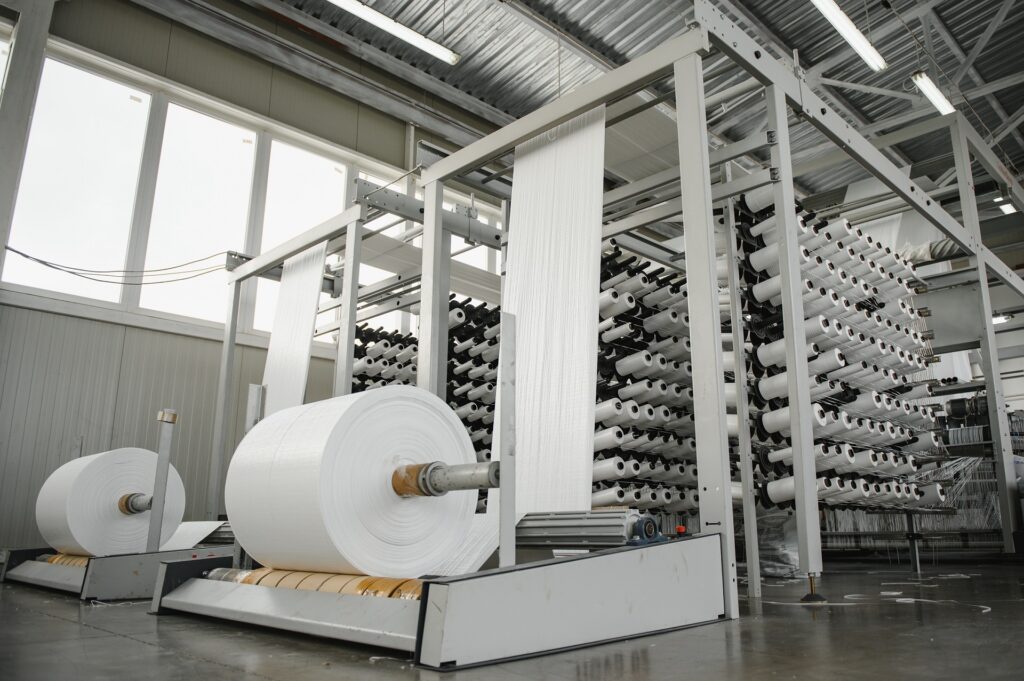
- Defined production sequences rather than fragmented subcontracting
- Basic batch-level traceability
- Documented inspection points for critical operations (weaving, cutting, sewing, final check)
This level of transparency reduces buyer uncertainty without requiring excessive customization.
2.Structuring FIBCs for Application, Not Just Capacity
Innovation increasingly comes from aligning FIBC design with real use conditions:
- Loop design and positioning matched to handling equipment
- Fabric choices based on abrasion and repeated handling, not only load rating
- Ventilation, liner integration, or discharge features designed for operational efficiency
When FIBCs are specified around how they are used, rather than abstract standards, failure rates and claims decline significantly.
3.Treat Packing and Shipment as Part of Manufacturing
Progressive suppliers now treat palletizing, compression control, and container loading as extensions of manufacturing quality. Practical measures include:
- Defined stacking and compression limits
- Protection against deformation during long-distance transport
- Visual inspection standards before shipment release
These controls are often low-cost to implement but high-impact in reducing disputes.
A Practical Supplier Checklist (Short-Term Impact)
- 1.Clarify and document production flow instead of relying on informal capacity claims
- 2.Establish basic batch traceability for fabric and finished bags
- 3.Align inspection criteria with buyer expectations, not internal convenience
- 4.Standardize packing and shipment practices
- 5.Adjust specifications by application and market, not only by SWL/SF
Conclusion
The FIBC market is no longer defined solely by who can produce the most bags at the lowest cost. As global supply chains become more risk-aware, competitive advantage shifts toward suppliers who can deliver predictable performance, transparent processes, and controlled delivery outcomes.
In this context, FIBCs are evolving from a packaging item into a risk-management component within industrial logistics. Suppliers who recognize this shift—and adapt their operations accordingly—will be better positioned for long-term, multi-market partnerships.